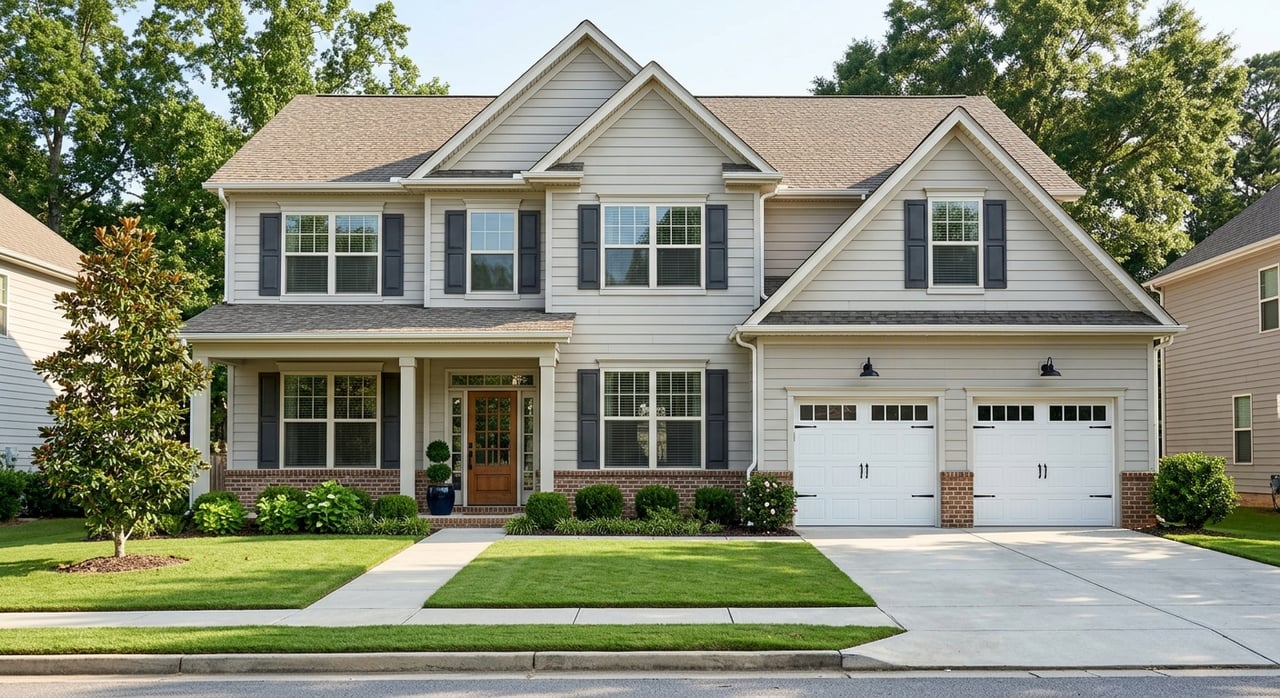
Athens GA Neighborhoods Guide for Choosing the Right Area
June 4, 2026
June 4, 2026
If you are trying to choose the right Athens neighborhood, you are not alone. Athens has a lot of variety packed into one market, from walkable intown areas near downtown and UGA to more suburban pockets where daily life often revolves around the car. When you know how each part of Athens functions, it becomes much easier to narrow your search and focus on the places that fit your budget, commute, and lifestyle. Let’s dive in.
The best neighborhood for you is not always the one with the most buzz. It is the one that supports your day-to-day routine, whether that means getting to campus quickly, being close to dining and events, finding a historic home, or keeping your purchase closer to the mid-$300,000s.
Athens-Clarke County breaks the area into two broad patterns: Traditional Athens and Greater Athens. Traditional Athens includes the historic core, downtown, the University area, and close-in centers like Five Points and Normaltown. Greater Athens is the newer suburban ring, where much of the county’s residential population, employment, and shopping areas are located.
If you want a simple first filter, think about whether you want a more walkable, close-in lifestyle or a more suburban routine. That one choice will point you toward very different parts of the market.
Traditional Athens is the county’s most pedestrian- and bike-friendly area. It is also the center for arts, entertainment, and alternative transportation, which makes it a strong fit if you want easier access to downtown, UGA, trails, and transit.
This part of Athens includes downtown, campus-edge neighborhoods, and several historic districts. In many of these areas, the street grid is tighter, destinations are closer together, and daily errands may require less driving than they would in the suburban ring.
Greater Athens is the more recently developed suburban ring around the core. The county says it contains most of the residential and employment population, along with many shopping areas.
If you prefer a car-first routine, newer suburban patterns, or a value-oriented comparison point, Greater Athens may be the better fit. In practical terms, these areas often trade some walkability for easier driving patterns and, in some cases, lower neighborhood median sale prices.
Your commute can shape your home search more than almost anything else. In Athens, that usually means deciding how close you want to be to downtown, UGA, or major shopping and work corridors.
If your top priority is a short trip to campus or downtown, focus on Traditional Athens and other close-in neighborhoods. The county’s planning framework identifies downtown and the University District as regional centers, and UGA is central to Athens’ identity and daily movement patterns.
UGA notes that Athens Transit stops throughout campus, and the UGA mobile app includes both UGA and Athens Transit routes plus parking information. Athens Transit also provides fare-free service and operates from the Multimodal Transit Center on East Broad Street, which functions as the system hub.
That combination matters if you want the option to walk, bike, ride transit, or keep your drive short. Intown and campus-edge neighborhoods are generally better suited to that kind of routine.
If you are comfortable driving for most errands, work trips, and entertainment, outer Athens may feel more natural. The suburban edges are more likely to depend on cars and corridor driving than the historic core.
That does not mean you have to give up connectivity. For example, the East Campus Connector links the Oconee Street Park-and-Ride near Loop 10 with the North Oconee River Trail and the UGA campus, creating an important transportation and recreation corridor from the east side toward downtown and UGA.
Walkability means different things to different buyers. For some, it means being able to reach coffee shops, restaurants, parks, or music venues without getting in the car. For others, it just means having more choices close by.
Downtown Athens is the region’s governmental, educational, cultural, and entertainment center. It has a dense urban core, a walkable street grid, and easy access to shops, eateries, venues, and landmarks.
The county’s planning framework also helps explain why nearby areas can feel different from each other. It uses Five Points as an example of a Neighborhood Center, which is smaller and highly pedestrian-oriented, while Normaltown is identified as a Community Center, which is larger and somewhat more auto-centric even though it is still walkable.
If access to trails and parks matters, the core has some of the county’s strongest connections. The North Oconee River Greenway includes 8 miles of paved multi-use trail from Sandy Creek Nature Center through Dudley Park toward the UGA campus.
The Firefly Trail also connects downtown Athens, Dudley Park, and Winterville. Dudley Park itself is a 32-acre park just a short walk from downtown and UGA, and Athens-Clarke County Leisure Services maintains more than 2,000 acres of parks and facilities across the community.
Once you narrow the map, the next question is lifestyle fit. Athens gives you several distinct choices, and each one comes with a different rhythm.
Downtown is the clearest concentration point for nightlife, events, and walkable dining. Official destination sources describe dozens of shops, eateries, venues, and landmarks within easy walking distance of the Firefly Trail trailhead.
Downtown also puts you close to major event spaces like The Classic Center Theatre and Akins Ford Arena. Athens’ live music identity is especially strong here, with venues used for AthFest Club Crawl including Georgia Theatre, 40 Watt Club, Live Wire Athens, Hendershot’s, Flicker Theatre & Bar, Ciné, and Nowhere Bar.
Near campus, you get another layer of activity and convenience. In addition to transit access, this part of Athens is close to UGA cultural spaces like the UGA Performing Arts Center and Fine Arts Theatre, which host concerts, theatre, dance, and other programming.
For buyers who want to stay plugged into the university side of Athens without necessarily living in the middle of downtown, campus-edge neighborhoods can offer a useful middle ground.
Athens has several historic intown districts with distinct housing stock and architecture. Boulevard, Cobbham, Dearing, Milledge, Milledge Circle, and West Cloverhurst/Springdale are among the notable examples identified by Athens-Clarke County.
Boulevard is described as a late-19th- and early-20th-century streetcar suburb with homes ranging from vernacular cottages to large mansions. Cobbham is Athens’ first suburb, known for substantial houses on tree-shaded streets, while Dearing includes homes built mostly between 1810 and 1910.
Historic homes can be a great fit if you value architecture and character, but it is important to understand the process before you buy. Athens-Clarke County has 16 local historic districts and 44 individual local historic landmarks.
In those areas, a Certificate of Appropriateness is required before exterior changes. That means if you are considering a historic property, you should be ready for preservation review when planning outside updates.
Budget matters, and in Athens, prices can shift a lot by area. Recent market snapshots place Athens and Clarke County broadly around the mid-$300,000s, though the exact number varies by source and methodology.
Redfin reported an Athens citywide median sale price of $350,000 and a Clarke County median sale price of $355,000 in April 2026. Zillow showed a Clarke County median sale price of $331,200 in March 2026, while Realtor.com reported a Clarke County median listing price of $375,000 and an Athens median listing price of $385,000 in March 2026.
Where Athens gets interesting is at the neighborhood level. Recent Redfin snapshots showed Eastside Athens with a median sale price of $331,000, while Downtown Athens came in at $443,000.
In higher-priced intown areas, the reported medians were much higher: Beechwood at $471,000, Boulevard at $735,000, Five Points at $773,000, and Normaltown at $770,000. That spread helps explain why buyers often start with lifestyle goals but make their final decision based on what is realistically available in each submarket.
One caution is important here. Some intown neighborhoods have very low transaction counts, which means the median can swing quickly from month to month.
For example, the reported Redfin snapshots showed only one home sold during the measured period in Boulevard and Normaltown, and only eight in Downtown Athens. That is one reason local guidance matters when you are comparing one neighborhood to another.
If you are feeling torn between two or three areas, use this quick checklist:
The right answer is usually the neighborhood that best supports your everyday life, not just the one that looks best online.
Athens is a market where neighborhood-by-neighborhood differences really matter. Two areas can both be considered close-in, yet feel very different in price, housing stock, parking, and daily convenience.
That is where experienced local guidance can save you time. With more than 40 years of local real estate experience and a strong understanding of financing, Linda can help you compare Athens neighborhoods in a way that matches both your lifestyle and your budget.
If you are weighing your options in Athens, working with a local expert can help you focus on the neighborhoods that truly fit. To start your search or talk through your goals, reach out to Linda Maples Realty.
Work with experienced Georgia real estate agent Linda Maples to buy or sell your dream home. Get a free valuation and view local listings.
Get In Touch With Linda To Learn More

2405 W Broad St Ste 150 Athens GA 30606