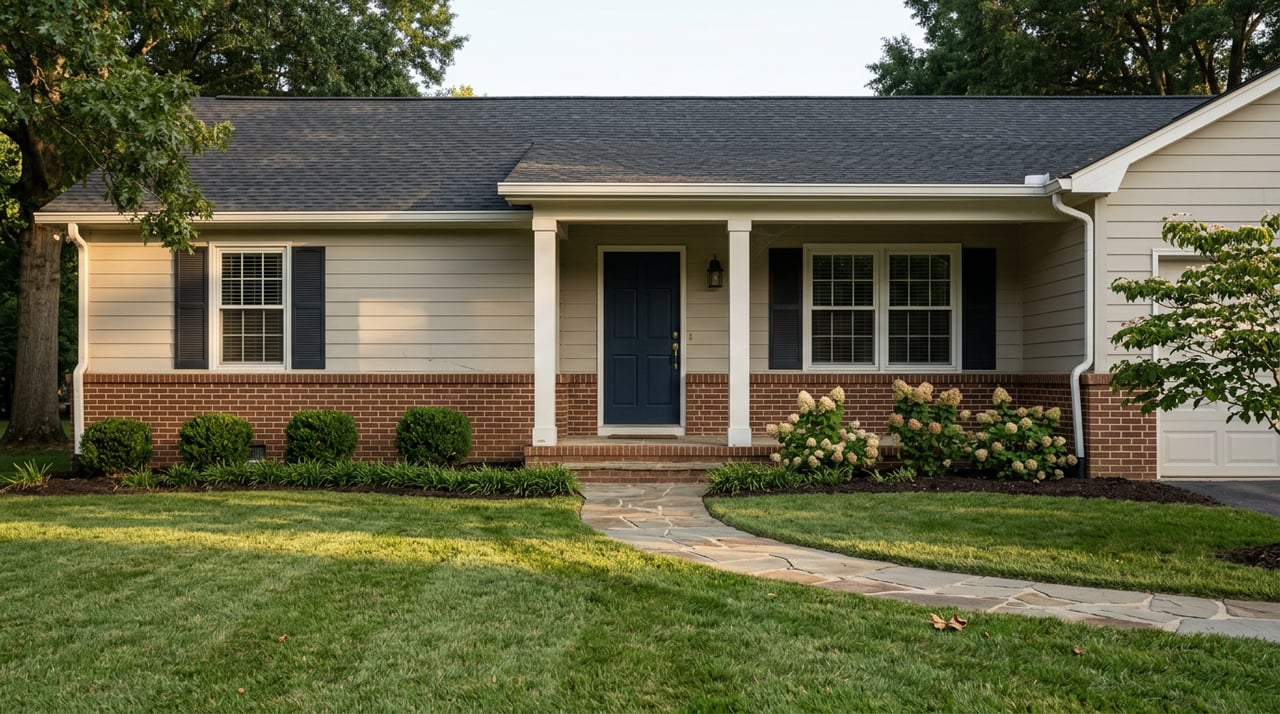
The Athens–Watkinsville Price Gap Isn't What It Looks Like on the Portal
August 13, 2026
August 13, 2026
You've run the numbers. Athens homes are selling for a median of $355,000 over the three months ending in May 2026. Watkinsville's median sale price is $605,000. That's a $250,000 gap, and on the surface it reads like a simple choice: pay less and stay in Clarke County, or pay a lot more and cross into Oconee.
Here's the part the listing price doesn't show you. Run the same two homes through their actual tax bills, and the annual gap between them shrinks to something closer to pocket change than a quarter-million-dollar decision. The county that costs more to buy into is not the county that costs more to own in, at least not proportionally. That inversion is the thing worth understanding before you decide which side of the county line makes financial sense for your family.
Let's start with what the portals actually show. Athens's median sale price over the three months ending in May 2026 was $355,000, up 1.4 percent from the same period a year earlier, with a median price per square foot of $197, down 4.1 percent year over year. Homes there sold in a median of 53 days, slightly slower than the 50-day pace from a year ago, with 402 homes changing hands in May alone.
Watkinsville tells a different story. Its most recent median sale price came in at $605,000, down 4.0 percent from a year earlier, with price per square foot at $265, down a much steeper 12.3 percent year over year. The Watkinsville market isn't competitive in the way Athens's is either. Multiple offers are rare, homes typically sell around 2 percent below list, and the average listing sits for roughly 105 days before going under contract.
So Athens is cheaper, faster-moving, and holding value better on a per-square-foot basis. Watkinsville is pricier, slower, and losing ground on price per square foot faster than Athens is. If you stopped reading here, the case for Athens would look closed. Most buyers do stop here.
Property tax rates in Georgia aren't set at the state level. Each county calculates its own budget need and divides it across the taxable value of everything inside its borders, which is why two counties fifteen minutes apart can carry meaningfully different rates. Oconee County's median effective property tax rate is 0.83 percent, below both the national median of 1.02 percent and Clarke County's median effective rate of 1.25 percent.
That gap runs in the opposite direction from what the sale prices suggest. Run a quick hypothetical to see how much it matters: put the same $500,000 home in each county. In Oconee, at 0.83 percent, the annual bill is about $4,150. In Clarke County, at 1.25 percent, it's about $6,250. That's a $2,100 annual swing in favor of the county with the higher home prices, on an identical home value.
Now apply the actual medians instead of a hypothetical. A $605,000 Watkinsville home at Oconee's 0.83 percent rate runs about $5,022 a year. A $355,000 Athens home at Clarke County's 1.25 percent rate runs about $4,438 a year. The purchase price gap between those two homes is 70 percent. The annual property tax gap between them is about 13 percent, roughly $584 a year.
A 70 percent gap in purchase price shrinks to roughly a 13 percent gap in the one bill you pay every single year.
That's not a rounding error. It's the tax-rate structure doing real work to close a gap the sale price makes look enormous. None of this is a substitute for pulling your own numbers. Georgia assesses property at 40 percent of fair market value before any rate is applied, and your actual bill depends on your assessed value, your homestead exemption, and whatever your specific city or school district adds on top of the county rate. Athens tax bills, for example, vary by ZIP code from around $2,753 in 30607 to around $3,429 in 30606, so even inside Clarke County the number moves. Treat the math above as a way to think about the relationship between the two counties, not a quote for your own address.
There's a second layer to this, and it's about direction, not just level. The $68 gap between Watkinsville's $265 per square foot and Athens's $197 per square foot works out to roughly a 35 percent premium for buying on the Oconee side of the line. But that premium is compressing, and it's compressing unevenly. Watkinsville's price per square foot fell 12.3 percent over the past year. Athens's fell only 4.1 percent over the same stretch.
If that pace continues, the per-square-foot premium buyers pay to be in Watkinsville gets smaller every quarter, not because Athens is getting more expensive but because Watkinsville is cooling faster. A buyer comparing the two markets isn't just choosing between two static price points. They're catching two markets moving at different speeds, with the more expensive one currently decelerating harder. That's worth knowing whether you're trying to time a purchase or trying to figure out how firm a Watkinsville seller's asking price actually is right now.
None of this means every dollar spent in Oconee County buys the same thing. Ask buyers shopping there this summer where their number came from and you'll hear three different answers, because "Watkinsville" covers a lot of ground.
The county-line comparison above is real and it matters, but which pocket of Oconee you're actually comparing to Athens changes what that $605,000 median buys you on the ground.
If you're a move-up family weighing Athens against Watkinsville, the honest version of the comparison isn't "cheaper county versus pricier county." It's "lower purchase price and higher ongoing tax rate versus higher purchase price and lower ongoing tax rate, with a per-square-foot premium that's currently shrinking faster than either side is used to."
That's a different decision than the one the median price implies, and it's the kind of math that's easy to get wrong from a spreadsheet and much easier to get right with someone who's run these numbers on actual closings across both counties. I've spent more than 40 years doing exactly that kind of comparison for buyers deciding between Athens and Oconee County, and the mortgage and lending side of my background is exactly where this analysis earns its keep. A pre-approval conversation is the right time to run your specific numbers, not after you've fallen in love with a house on either side of the line.
Does a lower county tax rate always mean lower total cost of ownership? Not automatically. Your actual bill depends on your home's assessed value, which is 40 percent of fair market value under Georgia law, plus any homestead exemption and any city or school levies layered on top of the county rate. The rate comparison tells you the structural tilt between counties. Your specific address tells you the real number, so verify with the county assessor's office before you budget off any estimate.
Will Watkinsville's price-per-square-foot premium over Athens keep shrinking? The trend over the past year points that direction, with Watkinsville's per-square-foot price falling roughly three times faster than Athens's. A single year of data is a trend, not a guarantee, and local inventory swings can move that number quickly in either direction.
Is this the same math for every home in Oconee County? No. North Oconee near GA-316 and Epps Bridge Parkway, in-town Watkinsville, and the rural stretch toward Bishop and High Shoals all carry different price-per-square-foot realities even though they share the same county tax rate. The county-level comparison is the starting point, not the finish line.
If you're weighing Athens against Watkinsville and want the real numbers run against a specific address on either side of the county line, Linda Maples has spent four decades doing exactly this kind of comparison for northeast Georgia buyers. Request a free home valuation or call directly to talk through what your budget actually buys once the tax bill is part of the conversation.
Work with experienced Georgia real estate agent Linda Maples to buy or sell your dream home. Get a free valuation and view local listings.
Get In Touch With Linda To Learn More
2405 W Broad St Ste 150 Athens GA 30606